
Sources reviewed September 5, 2026 · Editorial Policy
A credit report can show a wrong account, balance, or late payment. That error may affect a lender’s decision. You can dispute inaccurate or incomplete information for free.
Treat the dispute as a correction request. Name the exact item, attach proof, and contact each bureau that shows it. Also contact the company that supplied the data.
Quick answer: Check all three reports. Identify the exact error, collect copies of proof, and dispute it with each bureau showing it. Also contact the company that supplied the wrong information.
What can you dispute on a credit report?
You can dispute information you believe is inaccurate or incomplete. Common examples include:
- An account that does not belong to you
- A payment reported late even though it was made on time
- An incorrect account balance or credit limit
- The same debt appearing more than once when it should not
- A closed account reported as open
- An account incorrectly listed as delinquent
- Incorrect personal information that may cause someone else’s file to be mixed with yours
- Information that should have been updated after a lender corrected its records
A credit score itself is not a report item you dispute. The score is calculated from information in a credit report. If an incorrect balance, payment status, or account is affecting the score, dispute the underlying information.
Correct negative information usually cannot be removed just because it lowers a score. The FTC warns that credit-repair companies cannot erase accurate, current information. For the basics, read Finlitera’s Credit Reports and Scores lesson.
Step 1: Check all three credit reports
Start with the reports from Equifax, Experian, and TransUnion. The information may not be identical across all three, so note exactly which report contains each error.
AnnualCreditReport.com is the authorized site for free reports under federal law, according to the FTC. Avoid lookalike sites that ask for payment details.
For every questionable item, record:
- The credit bureau and report date
- The creditor or company name
- The account number as displayed, using only the final few digits in your notes when possible
- The exact field that is wrong
- What the correct information should be
- Why you believe it is incorrect
One dispute may not correct every report. File separately with each bureau that shows the error.
Step 2: Gather evidence before submitting
Give enough detail for the recipient to find and investigate the item. Helpful evidence can include:
- Bank or credit-card statements
- Payment confirmations
- Account statements showing the correct balance or status
- Correspondence from the lender or collector
- Identity-theft documentation
- Court records or discharge documents when relevant
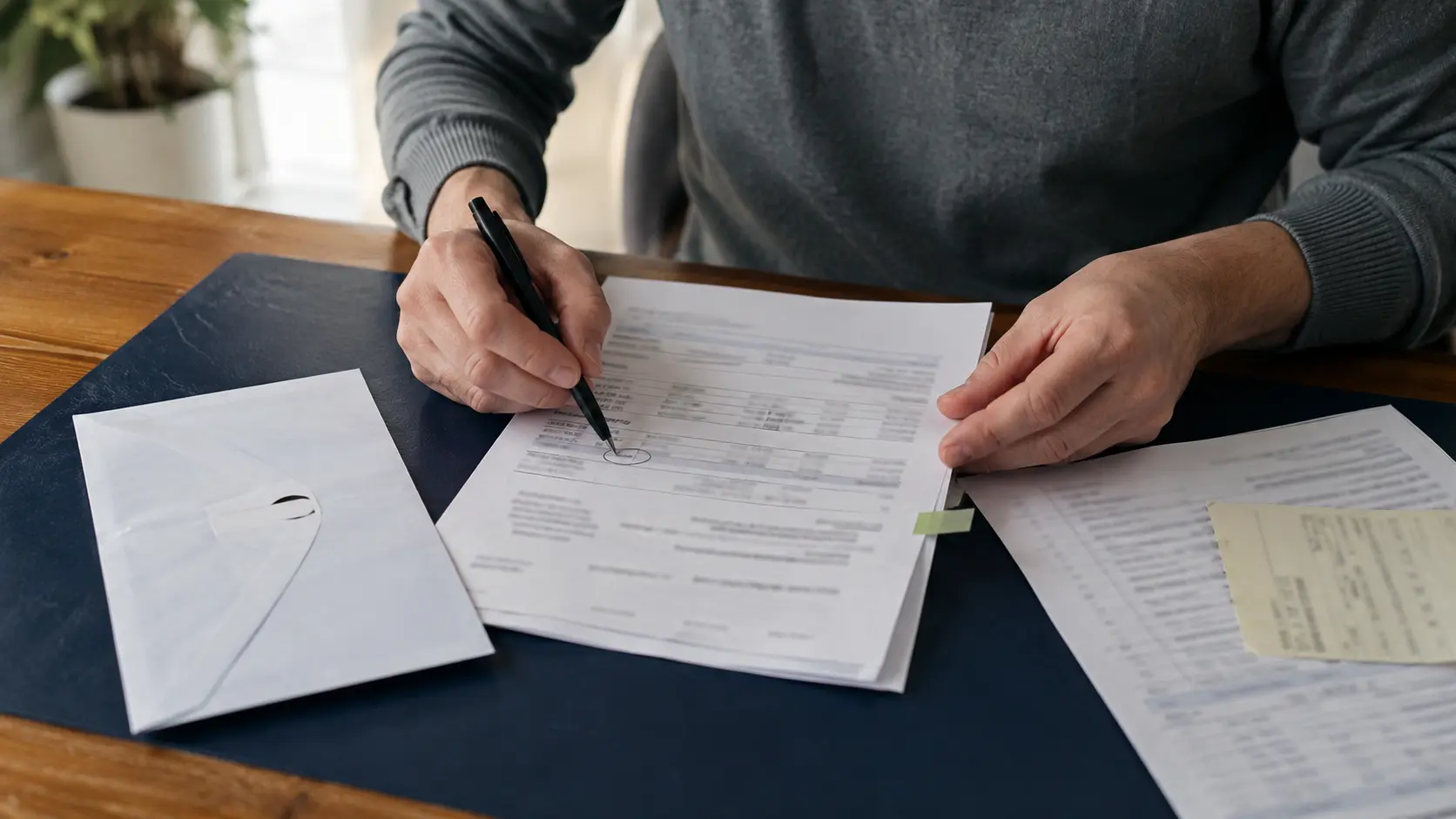
- A copy of the credit report with the disputed item clearly marked
Send copies, not originals. Save the report, evidence, letters, confirmation numbers, delivery records, and replies in a private folder. Redact unrelated sensitive details.
Step 3: Dispute with each credit bureau reporting the error
You can generally submit a dispute online, by mail, or by phone. The official dispute centers are:
Online systems can be convenient and provide electronic confirmation. A written dispute can make it easier to present a detailed explanation and supporting records. If you mail a dispute, the CFPB and FTC recommend using a trackable method such as certified mail and retaining proof of delivery.
For each disputed item, state:
- What information appears on the report
- Why it is inaccurate or incomplete
- What correction you are requesting
- Which attached documents support the correction
The CFPB’s sample dispute letters provide a reliable structure for both bureau and furnisher disputes. Personalize the letter to the facts; do not send a vague template without identifying the specific error.
Step 4: Dispute with the company that supplied the information
The business that reported the information is called the furnisher. It might be a lender, card issuer, collector, or landlord. The FTC advises contacting both the furnisher and the credit bureau.
Use the dispute address on the report or the company’s official instructions. Send the same facts and evidence. Verify the address before sending sensitive records.
Dispute the error with every credit bureau reporting it and with the company that supplied the information.
If the furnisher finds inaccurate or incomplete reporting, it must notify the affected credit bureaus. The information can then be corrected or deleted.
Step 5: Track the investigation and response
A credit bureau generally has 30 days to investigate. Some cases can take 45 days. After the investigation, it generally has five business days to notify you of the result.
These deadlines cover the investigation, not every later update. A furnisher may also investigate, and corrected data can take more time to appear on all three reports.
Create a simple tracking table:
| Field | Example |
|---|---|
| Item | Incorrect balance |
| Date submitted | Month/day |
| Recipient | Credit bureau and information furnisher |
| Confirmation | Saved privately |
| Expected response | 30 days, possibly 45 |
| Result | Pending |
Keep the report, supporting records, submission proof, and replies until the correction is complete.
What happens after the investigation?
The result generally falls into one of these categories:
The information is corrected or deleted
Review the updated report. Check the account, balance, payment status, dates, and personal details. Then verify any other bureau that showed the same error.
If a reported balance or limit is wrong, dispute that data. Finlitera’s credit utilization guide explains why the underlying figures matter.
The information is verified as accurate
Read the result notice and compare it with the evidence you submitted. If you have new or stronger documentation, contact the furnisher and the bureau again with a more specific explanation. Repeating the same unsupported claim may not help.
If the dispute remains unresolved, the FTC says you may ask for a statement of dispute to be included in your file and future reports. The CFPB also accepts complaints after you have first tried to resolve the problem directly with the company. For an issue involving major financial harm or legal deadlines, consider consulting a qualified consumer-law attorney.
The dispute is considered frivolous or irrelevant
A bureau may reject a dispute that lacks details or only repeats an old claim without new support. It must tell you why. Reply with the missing facts or evidence.
If the account may be identity theft
An unknown account may be a reporting error or identity theft. Use IdentityTheft.gov to report theft and create a recovery plan. Contact the business and follow the steps for blocking fraudulent data.
A security freeze can restrict access for new credit, but it does not correct fraud already on a report. Finlitera explains how to freeze all three reports. The Financial Scams lesson covers common pressure and impersonation tactics.
Avoid credit-repair shortcuts
Watch for credit-repair scams. Red flags include promises to delete all negative information, create a “new” credit identity, or dispute facts you know are correct. Never pay for a guaranteed result.
You can dispute real errors for free. Be specific and support the correction. Do not use a dispute to hide valid debt or payment history.
Credit report dispute checklist
- Request and review all three reports
- Mark each inaccurate or incomplete item
- Identify every bureau displaying the error
- Gather copies of relevant evidence
- Write a specific correction request
- Submit to each affected bureau
- Submit to the information furnisher
- Save confirmation and delivery records
- Calendar the expected response window
- Review the written result and updated report
- Escalate only after documenting the direct-dispute process
The bottom line
A strong credit-report dispute is precise, supported, and easy to track. Focus on one error at a time, contact both parts of the reporting chain, and preserve your evidence until every affected report reflects the outcome.
Read Finlitera’s Credit Reports and Scores lesson to see how report data affects credit decisions.
Continue learning
Learn the full identity-protection workflow.
Use the Academy lesson for the broader identity-theft, credit-freeze, fraud-alert, and recovery context.
Official Sources
- Consumer Financial Protection Bureau: How do I dispute an error on my credit report?
- Consumer Financial Protection Bureau: How long does it take to repair an error?
- Consumer Financial Protection Bureau: Sample dispute letters
- Federal Trade Commission: Disputing Errors on Your Credit Reports
- Federal Trade Commission: Free Credit Reports
- USA.gov: Dispute errors on your credit report
- IdentityTheft.gov: Identity-theft recovery plan
Finlitera provides general education, not personal financial or legal advice. Facts and cases vary. Contact the relevant organization or a qualified professional when needed.